
Seasonal
What Winter Does to a Dumpster Delivery
A container can freeze to the ground here. That is not a figure of speech and it is the single most common winter callback.
Winter is half the year
Sioux Falls sits on open prairie with nothing between it and Canada, and winter here is long, cold and windy in a way that changes the practical side of this job rather than just making it unpleasant.
Frost goes deep. Snow arrives in quantity and stays. Wind moves it around after it lands, which is arguably the bigger problem. And there are stretches where the temperature does not get above freezing for weeks.
None of that stops us delivering. It does change what we need to know before we set out.
⚠️ A container can freeze to the ground
The one people do not believe until it happens.
The mechanism is simple: meltwater runs under the rails during a warm spell, then refreezes at night and welds the container to the concrete or asphalt.
What prevents it:
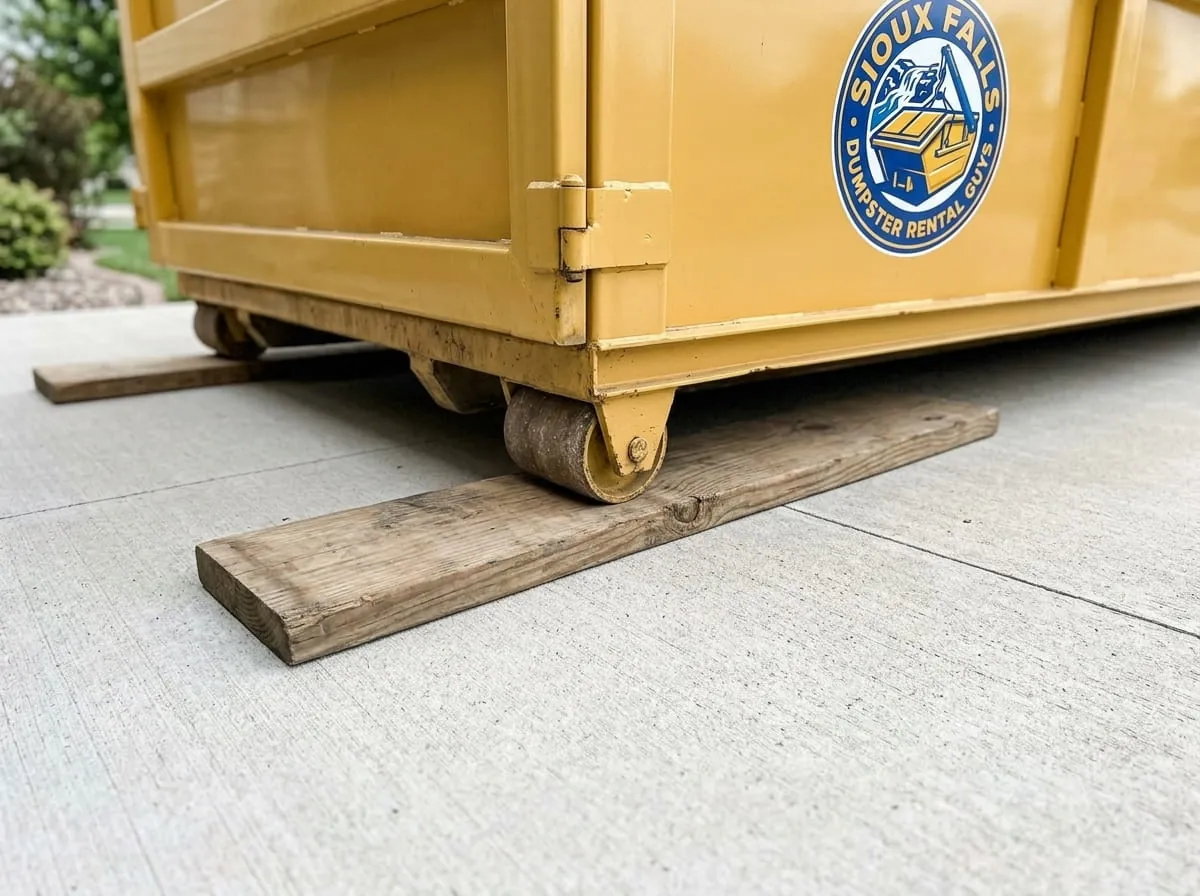
- Boards under the rails. Standard on every delivery, and in winter they earn their keep twice — they protect the surface and they break the ice bond.
- Not letting it sit longer than needed. A container that is finished with is better collected than left through another cycle.
- Telling us if the drive slopes or drains toward the placement. That is where the water goes.
Snow banks narrow everything
A driveway that comfortably takes a 20 yard in September may not in January.
The numbers: a 20 yard is twenty-two feet of container, and the truck needs roughly ten more feet of clear run behind it to set it down and pick it up. A 15 yard takes six feet less on the ground.
Now add winter:
- Plowed snow narrows a driveway by a foot or more on each side, and it compacts into something closer to ice than snow.
- Banks at the end of the drive — left by the street plow — can block the approach entirely.
- Turning space shrinks everywhere at once, which matters more than the driveway itself on a cul-de-sac.
The practical answer is often a 15 yard with a swap where a 20 would have gone in summer. Same total volume, a shape that actually fits.
Snow and ice are weight you pay for
An open container left through a snowfall collects it, and that snow is not free.
Disposal is charged by the ton. A 20 yard with several inches of wet snow across the load is carrying real weight that has nothing to do with your project — and if it thaws and refreezes, it becomes ice, which is heavier again and does not drain out.
Two things help:
- Ask about a cover if the container will sit across several days in winter.
- Load and go. A container filled over one weekend and collected on Monday collects far less than one sitting for three weeks.
This is also why roofing tear-offs are worth timing carefully — shingle and felt soak up meltwater readily.
Where the plow puts the snow
The single most useful sentence a customer can give us in January.
A placement that works perfectly in October can be unreachable in January because that is where the snow has been going all winter. We would much rather know at booking than find out with a loaded truck on the street.
Worth mentioning:
- Which side of the drive the snow gets pushed to
- Whether the street plow leaves a bank across your approach
- Whether there is anywhere the container can sit that stays clear
- Whether the drive has a slope that ices over
And a request that is not a formality: clear the placement area before the delivery window. A foot of packed snow under a container is a foot of packed snow that will still be there, as ice, at collection.
⚠️ Blizzards and the schedule
Being honest about this is better than promising otherwise.
When a genuine blizzard closes roads, nobody is delivering — including us. Interstates around here get closed, and the City's own services stand down. If a storm is forecast across your delivery window, we will talk to you about moving it rather than leaving you waiting.
What that means for planning:
- Build slack into a winter project. A job that must finish on a fixed date should start earlier than it would in July.
- Book the swap before you need it, not on the morning you fill up.
- If a storm is coming and your container is nearly full, call. Better collected before than buried during.
- Storm damage is different. After a bad wind or ice event everyone calls at once — containers genuinely run short, so call early.
Frost, basements and spring
Two structural points that shape the work we see here.
Nearly every house in this region has a full basement, and the reason is the frost line. Foundations have to go deep enough to sit below it regardless, so the marginal cost of a full basement is small. The consequence for us is that almost every clear-out includes one, and a basement held by one family for decades is full to the joists.
And the freeze-thaw cycle is hard on driveways. Water gets into a crack, freezes, expands and widens it, repeatedly, all winter. Every concrete and asphalt drive in this city has been worked on that way for years, which is precisely why boards go down as standard and why an already-cracked slab needs mentioning.
Spring brings its own version: the ground softens as the frost comes out, and a loaded truck on soft ground is a genuine consideration on acreages and rural properties out toward Humboldt, Baltic and Renner.
Planning a winter job
- Tell us where the plow pushes the snow
- Clear the placement area before the delivery window
- Expect a 15 yard with a swap where a 20 would fit in summer
- Ask for boards — they are standard, and in winter they break the ice bond
- Ask about a cover for anything sitting several days
- Do not let it sit through more thaw cycles than necessary
- Mention any slope, or drainage toward the placement
- Build slack into the schedule for storms
- Book the swap in advance
- After a storm event, call early — containers run short
Need a container in Sioux Falls?
Call and describe the job. Three minutes on the phone gets you a size recommendation, a flat rate and a delivery window — and we will tell you if a smaller, cheaper container is the right answer.
Call (605) 789-8505